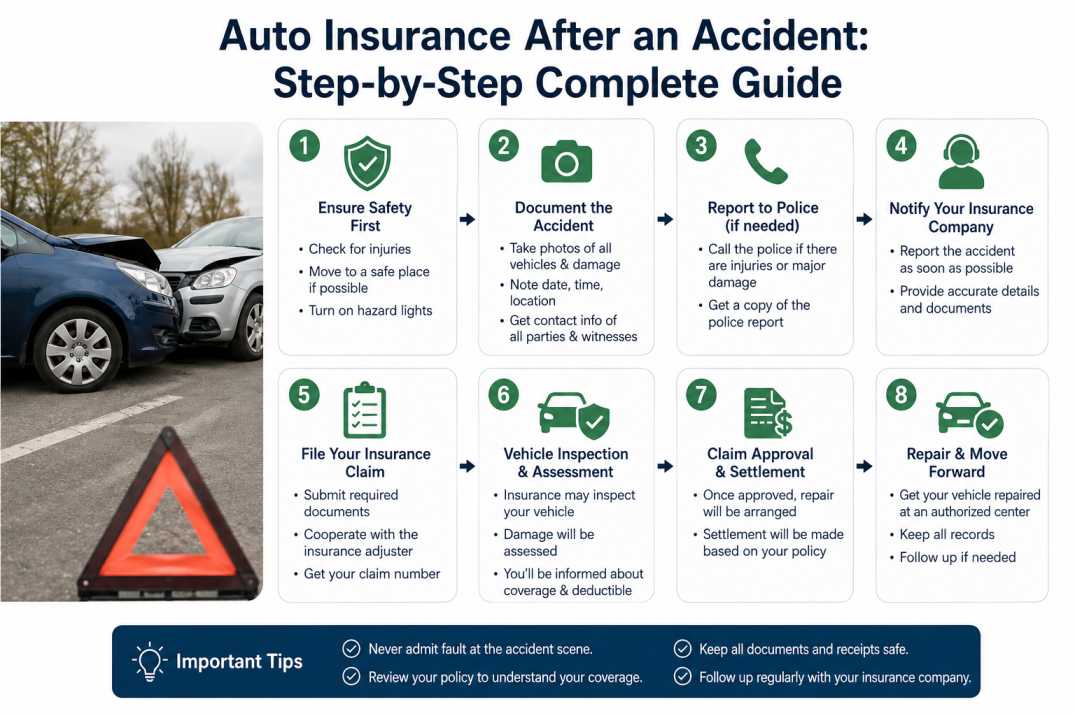
Auto insurance after an accident can feel confusing, especially when emotions are high and there is damage to handle. However, knowing the right steps can protect your safety, support your insurance claim, and reduce delays during the process.
What to Do Right After an Accident
The first few minutes after a crash are important. First, stay calm and focus on safety. Then, work through the next steps carefully.
- Move to a safe area: If possible, move your vehicle away from traffic to prevent another collision.
- Check for injuries: Make sure everyone is safe. If anyone is injured, call emergency services immediately.
- Contact the police: In many cases, a police report can help support your insurance claim later.
- Exchange information: Share names, contact details, license plate numbers, and insurance information with the other driver.
- Take photos: In addition, document vehicle damage, road conditions, and any visible injuries.
How Auto Insurance After an Accident Works
Once the accident scene is secure, the next step is to contact your insurance company. Generally, reporting the accident quickly helps prevent claim delays and confusion.
Step-by-Step Insurance Claim Process
- Report the accident: Contact your insurer as soon as possible and explain what happened clearly.
- Submit documents: Provide photos, police reports, repair estimates, and medical records if needed.
- Work with the adjuster: After that, the insurance adjuster will inspect the damage and review your claim.
- Review coverage details: Meanwhile, check your deductible, rental coverage, and repair options.
- Follow up regularly: Staying in touch with your insurer can help move the claim forward faster.
Common Mistakes to Avoid
Even small mistakes can create problems later. Therefore, try to avoid these common issues after an accident.
- Do not admit fault: Let the police and insurance companies investigate the accident fully.
- Does not delay reporting: Waiting too long may affect your claim process.
- Do not skip documentation: Clear photos and records can strengthen your case.
- Not accept quick settlements without review: In some cases, repair or medical costs may appear later.
Documents You May Need
Keeping documents organized can make the process smoother. As a result, your insurer may process the claim more efficiently.
- Police report
- Photos of vehicle damage
- Medical records if injuries occurred
- Proof of insurance and vehicle ownership
- Witness statements if available
- Repair estimates or invoices
Tips for a Smoother Claim Experience
Preparation can make a stressful situation easier to manage. For example, review your policy regularly so you understand your coverage before an accident happens.
In addition, keep emergency contact numbers and insurance details in your vehicle or phone. You can also review safety and claims guidance from the Insurance Information Institute and accident reporting information from the National Highway Traffic Safety Administration.
Conclusion
Handling auto insurance after an accident becomes more manageable when you follow the right steps. First, protect everyone involved. Next, collect accurate information and document the scene carefully. Finally, report the accident quickly and stay in contact with your insurer throughout the claim process.
Most importantly, understanding your coverage and keeping good records can help reduce stress, avoid delays, and support a smoother recovery after a crash.
About the Author