
Subrogation automation helps insurers find more third-party recovery opportunities without adding more adjusters. It scans claim data, flags files with recovery value, and helps teams act before deadlines are missed.
In simple terms, automated subrogation gives claims teams a better way to spot money that may be recoverable from another party. As a result, carriers, TPAs, and commercial lines teams can reduce leakage and improve claim outcomes.
This guide explains how the process works, where it helps most, and what insurers should review before choosing a platform. Because subrogation can involve legal timing and claim-specific rules, teams should also review trusted resources such as the National Association of Insurance Commissioners and their own legal counsel.
What Is Subrogation Automation?
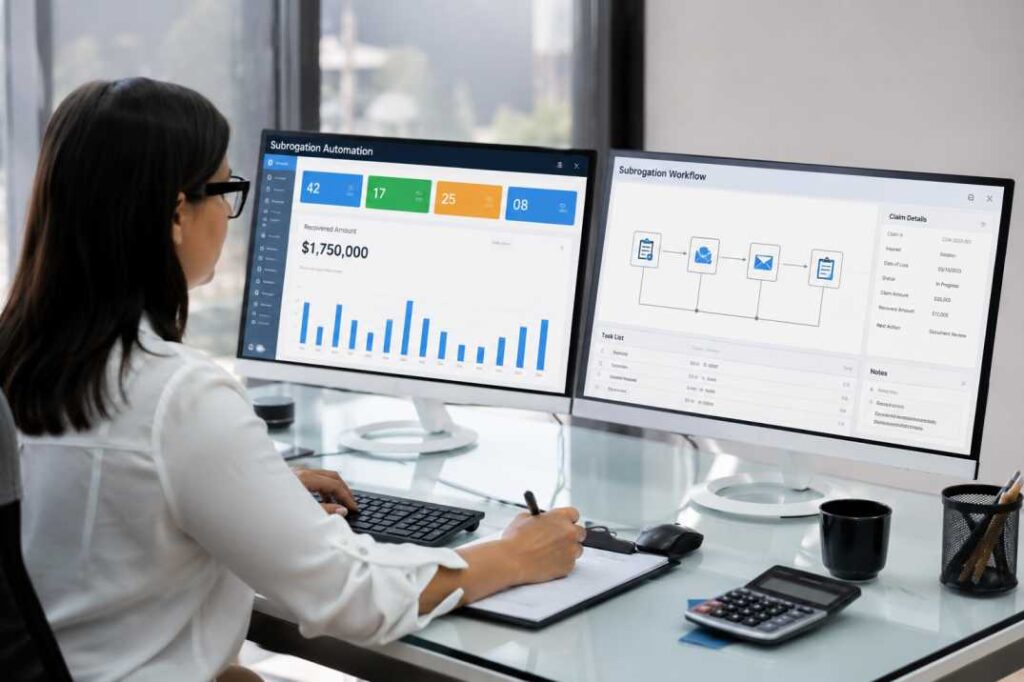
Subrogation automation is software that helps identify claims where another person, company, or insurer may owe money. Instead of relying only on manual review, the system checks claim notes, loss details, photos, invoices, reports, and other files.
Then, it alerts the right team when a claim may have recovery potential. Therefore, adjusters do not need to catch every opportunity on their own.
Traditional subrogation can be slow. Files may sit too long, notes may be missed, and deadlines may pass. However, automation keeps checking the claim as new data arrives.
Why Insurers Are Using Subrogation Automation
Claims teams face more pressure today. Claim costs are rising, workloads are heavy, and skilled adjusters are hard to hire. Because of this, many insurers want better recovery results without growing headcount.
Subrogation automation supports that goal. It helps teams find more recoverable claims, start recovery sooner, and route work to the right people.
Common Reasons Teams Invest
- Higher claim volume
- Missed third-party recovery opportunities
- Rising claim severity
- Limited adjuster capacity
- Slow manual review
- Need for better reporting
- Pressure to reduce leakage
How Automated Subrogation Improves Recovery
The biggest benefit is consistency. A tired or busy adjuster may miss a clue. However, software can apply the same rules across every claim.
For example, a commercial auto claim may include police report language that points to another driver being at fault. The system can flag that file, assign a task, and help the recovery team act sooner.
As a result, the insurer has a better chance to recover money before records disappear or time limits expire.
Where Automation Reduces Leakage
- Missed liability clues
- Late recovery action
- Incomplete documents
- Poor handoffs between teams
- Manual tracking mistakes
- Expired legal deadlines
Best Claim Types for Subrogation Automation
Many claim types can benefit. However, some lines usually show stronger value because they have high volume or clear third-party fault patterns.
Commercial Auto Claims
Commercial auto claims often include accident reports, vehicle damage, and fault details. Therefore, they are a strong fit for automated review.
Workers’ Compensation
Workers’ compensation claims may involve outside drivers, unsafe job sites, faulty equipment, or negligent contractors. Automation can help spot those clues earlier.
Property Insurance
Property claims may involve water damage, utility failures, product defects, or contractor mistakes. In these cases, automated subrogation can help preserve evidence and route the claim.
General Liability
Liability claims can involve several parties. Automation helps organize facts, assign tasks, and flag possible contribution from another party.
Key Features to Look For
Not every platform works the same way. Before choosing a vendor, insurers should review accuracy, workflow fit, reporting, and integration options.
1. Recovery Detection
The platform should scan claim data and documents for signs of third-party liability. It should also explain why a claim was flagged.
2. Claims System Integration
The tool should connect with the insurer’s claim system, document storage, and workflow tools. Otherwise, staff may need to enter data twice.
3. Workflow Automation
Good systems can assign tasks, escalate files, and remind teams about next steps. As a result, fewer files fall through the cracks.
4. Dashboards and Reporting
Leaders need clear reports. Useful dashboards show recovered dollars, cycle time, claim leakage, and team performance.
5. Deadline Tracking
Subrogation often depends on timing. Therefore, alerts for statutes of limitation and key dates are important.
Benefits for Adjusters
Automation does not remove the need for skilled adjusters. Instead, it helps them focus on higher-value work.
For example, adjusters can spend less time searching for recovery clues and more time reviewing strong files, gathering evidence, and negotiating outcomes.
Operational Benefits
- Less manual review
- Faster claim triage
- Better recovery prioritization
- Fewer missed tasks
- Cleaner handoffs
- More consistent workflows
Challenges to Plan For
Subrogation automation works best when claim data is clean and teams know how the workflow should run. However, poor data can reduce accuracy.
For that reason, insurers should start with a pilot. They should also set clear goals before a full rollout.
Common Risks
- Incomplete claim data
- Legacy system limits
- Low adjuster adoption
- Unclear recovery rules
- Poor reporting setup
How TPAs Use Automated Subrogation
TPAs often handle large claim volumes for several clients. Therefore, they need a repeatable process.
Automated subrogation helps TPAs standardize recovery work, show better results, and give clients clearer reports. In addition, it can help them stand out in a competitive market.
How to Measure ROI
Insurers should track both money and workflow gains. This makes it easier to see whether the platform is working.
Helpful KPIs
- Total recovered dollars
- Recovery rate
- Average recovery cycle time
- Number of flagged claims
- Claims handled per adjuster
- Cost per recovery file
- Reduction in leakage
Even small gains can matter at scale. For example, a carrier with thousands of claims may see meaningful value from finding only a few more recoverable files each month.
The Future of Subrogation Automation
Subrogation automation will likely become smarter over time. Future tools may score recovery odds, suggest next steps, and help teams choose better settlement strategies.
However, human review will still matter. Claims teams need judgment, legal review, and negotiation skill. Automation simply helps them find and manage the right files faster.
Final Thoughts
Subrogation automation gives insurers a practical way to recover more from third parties without adding adjuster headcount. It improves detection, speeds up workflows, and reduces missed opportunities.
For carriers, TPAs, and commercial claims teams, automated subrogation can be a strong step toward lower leakage and better claim performance. However, success depends on clean data, clear workflows, and careful vendor selection.
About the Author