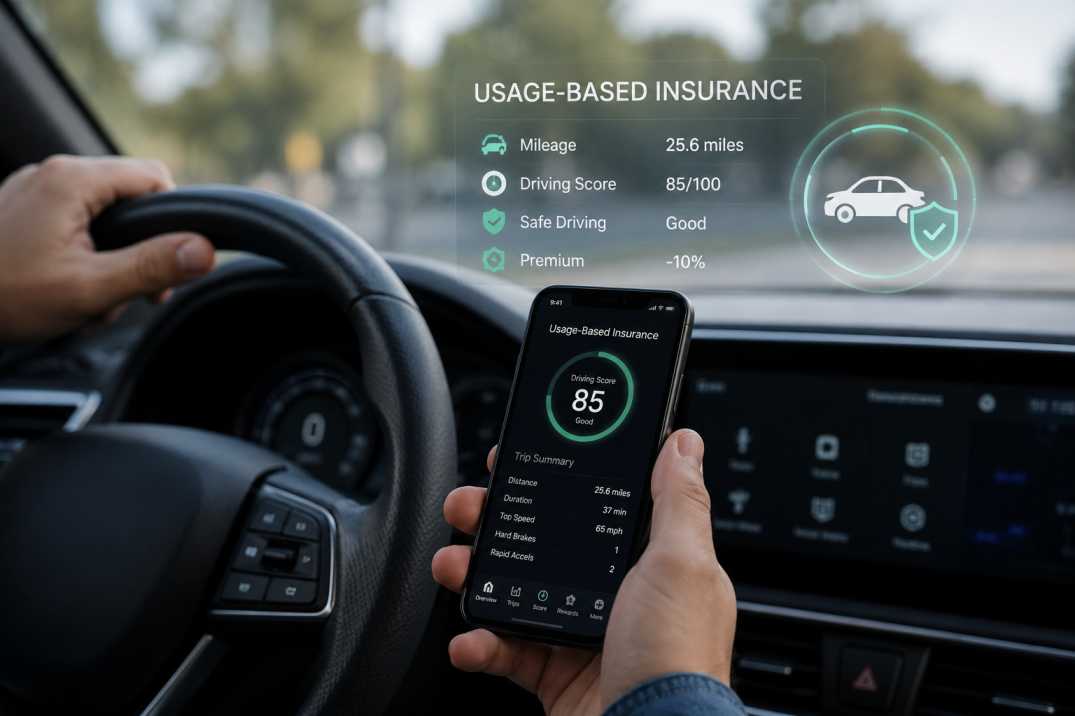
Drivers who travel fewer miles can monitor their insurance through a mobile app.
Usage-based insurance can help new drivers lower car insurance costs in 2026. Instead of judging you only by age or driving history, these programs use telematics car insurance data to reward safer habits.
For many young or first-time drivers, that can be a big deal. However, savings vary by company, state, mileage, and driving behavior. Therefore, it is smart to compare each program before you enroll.
What Is Usage-Based Insurance?
Usage-based insurance, also called UBI, uses a mobile app, plug-in device, or connected car data to track how you drive. Then, the insurer may adjust your discount based on your score.
Most programs look at simple habits. For example, they may track hard braking, fast acceleration, speeding, mileage, phone use, and late-night driving.
Best Telematics Programs for 2026
Below is a quick comparison of popular U.S. telematics car insurance programs. Since rules can change by state, always confirm details with the insurer before buying.
| Program | Company | Potential Savings | Best For |
|---|---|---|---|
| Drive Safe & Save | State Farm | Up to 30% | Careful daily drivers |
| Snapshot | Progressive | Average savings reported at renewal | Low-mileage drivers |
| Drivewise | Allstate | Enrollment and safe-driving savings | Cautious new drivers |
| SmartRide | Nationwide | Up to 40% | Drivers who avoid risky trips |
Which Program Saves New Drivers Most?
Nationwide SmartRide and State Farm Drive Safe & Save show some of the highest advertised discount ceilings. However, the best program is not always the one with the biggest maximum discount.
For example, a new driver who drives only a few miles each week may do better with a mileage-sensitive program. Meanwhile, a student who drives late at night may save less, even with a strong daytime driving score.
Estimated Savings for New Drivers
Here is a simple example. If a new driver pays $2,500 per year for auto insurance, usage-based insurance could reduce the cost in a few ways:
- Small discount: 5% savings may lower the bill by about $125 per year.
- Moderate discount: 15% savings may lower the bill by about $375 per year.
- Strong discount: 30% savings may lower the bill by about $750 per year.
- Top discount: 40% savings may lower the bill by about $1,000 per year.
As a result, safe new drivers may save hundreds each year. Still, these are estimates, not guarantees.
Pros and Cons of Usage-Based Insurance
Pros
- You can prove safe driving sooner.
- You may get an enrollment discount.
- You receive feedback that can improve your habits.
- You may pay less if you drive fewer miles.
Cons
- Some programs may raise rates for risky driving.
- Apps may track location and driving behavior.
- Discounts can change at renewal.
- Late-night driving may hurt your score.
How to Pick the Right Program
First, check whether the program is available in your state. Next, ask if poor driving can increase your rate. Finally, compare the enrollment discount, maximum discount, tracking method, and privacy rules.
If you are a new driver, also ask whether the discount applies to your own vehicle, a family policy, or a student driver listed on a parent’s policy.
Tips to Save More
- Brake early and smoothly.
- Avoid fast acceleration.
- Limit late-night trips when possible.
- Keep your phone untouched while driving.
- Drive fewer miles if your program rewards low mileage.
Car insurance for young drivers often comes with higher premiums because insurance companies consider inexperienced drivers more likely to be involved in accidents. However, young drivers can still find affordable coverage by comparing quotes, maintaining good grades, and driving safely. In addition, choosing vehicles with strong safety features can help reduce insurance costs.
Moreover, many insurers offer discounts for defensive driving courses and low annual mileage. A reliable car insurance policy not only protects young drivers from unexpected financial losses but also provides peace of mind on the road. Therefore, understanding coverage options and building a clean driving record can lower premiums over time. Finally, careful planning and responsible driving habits can help young drivers save even more money on car insurance.
Conclusion:
In 2026, usage-based insurance is one of the best options for new drivers who want lower premiums. It is especially useful for careful drivers, low-mileage drivers, and students who can build a strong safety score.
However, compare the rules before you enroll. The right telematics car insurance program should match your driving habits, privacy comfort level, and budget.
About the Author