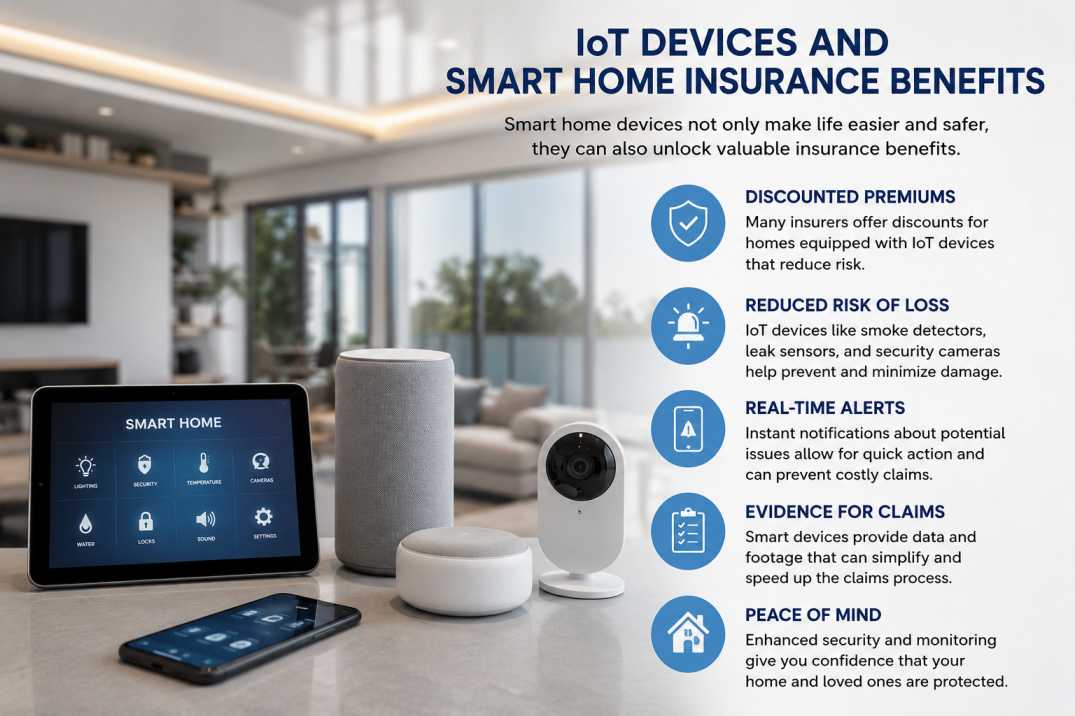
IoT devices smart home insurance programs are helping homeowners reduce risks, improve safety, and possibly lower insurance costs. Smart cameras, leak detectors, connected smoke alarms, and smart locks can alert homeowners before small problems become expensive repairs. Because of this, many insurance companies now offer discounts for homes that use approved smart technology.
These connected devices also help insurers better understand how a property is protected. For example, a leak detector may warn homeowners about a water issue before serious damage happens. In the same way, smart security systems can reduce theft risks and improve home monitoring.
What Are IoT Devices in Home Insurance?
IoT stands for the Internet of Things. These devices connect to the internet and share data in real time. In home insurance, insurers may use information from smart devices to assess property risks more accurately.
Common smart home devices include:
- Smart doorbells and security cameras
- Water leak and flood detectors
- Smart smoke and carbon monoxide alarms
- Connected thermostats
- Motion and entry sensors
- Smart locks
Homeowners who use these devices may qualify for policy discounts or extra benefits, depending on the insurer.
How Smart Home Insurance Programs Work
Smart home insurance programs use real-time data from connected devices to help insurers evaluate risks. Traditional insurance policies often rely on factors like location, property age, and claims history. Smart devices add another layer of information.
For example, homes with leak detectors and monitored alarms may appear lower risk to insurance companies. As a result, some homeowners receive lower premiums or customized coverage options. Many insurers also provide mobile apps that send alerts and allow users to monitor devices remotely.
Benefits of Smart Home Devices
Smart home technology offers more than possible insurance savings. These devices can also improve home security, reduce damage risks, and provide peace of mind.
Main benefits include:
- Possible discounts on home insurance
- Early detection of leaks and fire hazards
- Better security monitoring
- Reduced risk of theft or property damage
- Remote access to home alerts and controls
- Improved energy efficiency in some homes
As smart home technology becomes more common, insurance companies may continue expanding these programs.
Privacy and Security Concerns
Although smart devices offer many advantages, homeowners should still think about privacy and data security. IoT devices collect information about home activity, system usage, and security events. Therefore, Before joining a smart home insurance program, it is important to understand how that data is stored and used.
Homeowners can improve security by:
- Using strong passwords
- Keeping device software updated
- Securing Wi-Fi networks
- Reviewing privacy settings regularly
Moreover, Taking these steps can help reduce cybersecurity risks connected to smart home systems.
Tips for Choosing IoT Devices for Insurance Savings
If you want to improve home safety and possibly qualify for discounts, choose reliable smart devices that match your insurance provider’s requirements.
Helpful tips include:
- Install leak detectors near bathrooms and kitchens
- Choose smoke alarms with mobile notifications
- Use devices with strong security protections
- Update apps and firmware regularly
- Ask your insurer about approved smart devices
The Future of Smart Home Insurance
Smart home insurance is likely to grow as more households adopt connected technology. Insurers may continue creating personalized policies that reward homeowners for preventing damage before it happens.
While privacy concerns remain important, many homeowners appreciate the added safety, convenience, and potential savings that IoT devices provide. By using smart technology responsibly, homeowners can better protect their property and reduce long-term risks.
For more information about connected home technology, visit CISA IoT Security Guidance and Consumer Reports Smart Home Security Tips.
Conclusion:
In today’s modern homes, the integration of IoT devices with smart home insurance offers tremendous advantages. Firstly, these systems enhance security and real-time monitoring, reducing potential risks effectively. Moreover, they enable quick detection of incidents like leaks or fires, minimizing damage. Therefore, insurance providers often view smart homes and also as lower-risk, leading to premium discounts or better coverage. Additionally, homeowners gain peace of mind through automated alerts and preventive features. Finally, this synergy creates a safer and more efficient living environment that saves both time and money.
About the Author