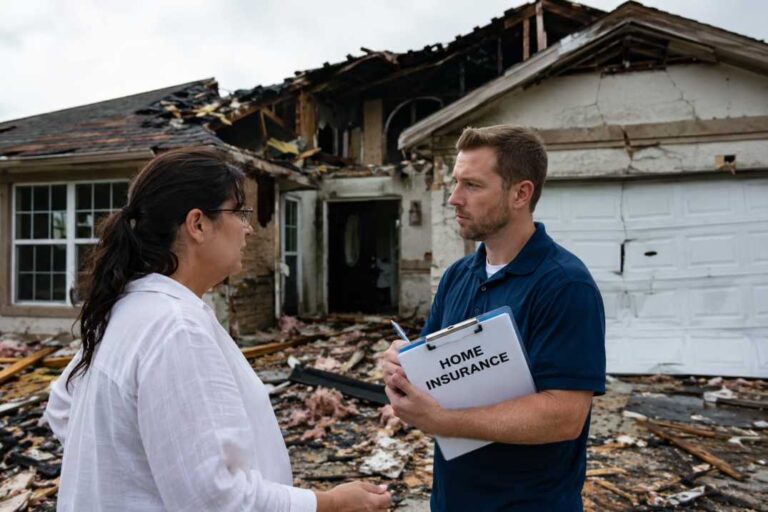

Wildfires are becoming more frequent and severe, making wildfire home insurance a critical part of protecting your property. As fire risks increase in many regions, homeowners need to understand how their insurance works and what steps they can take to reduce potential losses.
While no home is completely fireproof, the right insurance coverage combined with smart preparation can significantly reduce financial stress after a wildfire. This guide explains wildfire home insurance, what it covers, and how you can prepare effectively.

What Does Wildfire Home Insurance Cover?
Most standard home insurance policies include wildfire damage under dwelling coverage. However, coverage details can vary, so it’s important to review your policy carefully.
- Dwelling coverage: Pays for repairs or rebuilding if your home is damaged by fire.
- Personal property: Covers belongings like furniture, electronics, and clothing.
- Additional living expenses (ALE): Helps pay for temporary housing if your home becomes uninhabitable.
Some insurers may apply restrictions in high-risk areas, so always confirm limits, exclusions, and deductibles.
How to Check and Improve Your Coverage
To make sure your wildfire home insurance is adequate, take these steps:
- Review your current policy for fire-related coverage limits.
- Compare quotes from multiple insurers to find better protection.
- Consider extended replacement cost coverage if available.
- Ask about endorsements for high-risk wildfire zones.
Document Your Property Before a Wildfire
Accurate documentation makes the claims process smoother and faster. Keep a record of your belongings and property condition.
- Create a home inventory with item descriptions and values.
- Take clear photos or videos of each room.
- Store receipts for major purchases and upgrades.
- Keep digital backups of important documents.
Home Hardening Tips to Reduce Risk
Insurance is important, but prevention can reduce damage significantly. Home hardening focuses on making your property more resistant to fire.
- Clear dry vegetation and debris around your home.
- Install fire-resistant roofing and siding materials.
- Seal vents, gaps, and openings to block embers.
- Keep gutters clean and free of leaves.
Wildfire Evacuation Planning
Having a clear evacuation plan can save lives during an emergency.
- Identify at least two safe exit routes.
- Prepare an emergency kit with essentials.
- Plan for pets and livestock in advance.
- Set a meeting point outside the risk area.
How to Prepare for an Insurance Claim
After a wildfire, quick action helps ensure a smoother claims process.
- Contact your insurance company as soon as possible.
- Document all damage with photos and videos.
- Keep receipts for temporary living expenses.
- Do not discard damaged items until approved.
Conclusion
Wildfire home insurance is a key part of protecting your home and finances. By understanding your coverage, documenting your property, and taking preventive steps, you can reduce risk and recover faster after a disaster.
Review your policy regularly and make updates before wildfire season begins. A little preparation today can make a big difference when it matters most.
About the Author