

Storm damage can leave homeowners stressed and unsure about what to do next. Understanding roof damage insurance claims can help you move faster, avoid delays, and improve your chances of approval. Whether strong winds, hail, or heavy rain damaged your roof, taking the right steps early can make the process smoother.
In this guide, you’ll learn how to inspect damage, document evidence, work with your insurer, and avoid common mistakes during a roof insurance claim.

Step 1: Inspect Roof Damage Safely
First, inspect your roof as soon as it is safe. Quick action helps you identify serious issues early. However, avoid climbing onto a damaged roof if conditions look unsafe.
Look for signs such as:
- Missing or cracked shingles
- Leaks or ceiling stains
- Damaged flashing around vents or chimneys
- Loose roofing materials after strong winds
If needed, contact a licensed roofing contractor for a professional inspection.
Step 2: Take Clear Photos and Videos
Next, document everything carefully. Good evidence often speeds up roof damage insurance claims because it gives adjusters a clearer picture of the damage.
- Take close-up and wide-angle photos
- Record videos from different areas
- Write down the date of the storm
- Save repair estimates and receipts
In addition, keep damaged materials if possible until the inspection is complete.
Step 3: Contact Your Insurance Company Quickly
After gathering evidence, report the damage to your insurance company. Most insurers prefer early reporting, so do not wait too long.
During the call, make sure you:
- Explain how the damage happened
- Share photos and videos
- Ask about your deductible and coverage limits
- Request details about the claims process
Your insurer will usually schedule an adjuster visit within a few days.
Step 4: Meet the Insurance Adjuster
The insurance adjuster will inspect your roof and estimate repair costs. Therefore, preparation matters.
To make the meeting easier:
- Bring all documents and photos
- Point out visible damage clearly
- Take notes during conversations
- Ask questions if something sounds unclear
Clear communication can reduce misunderstandings and help avoid delays.
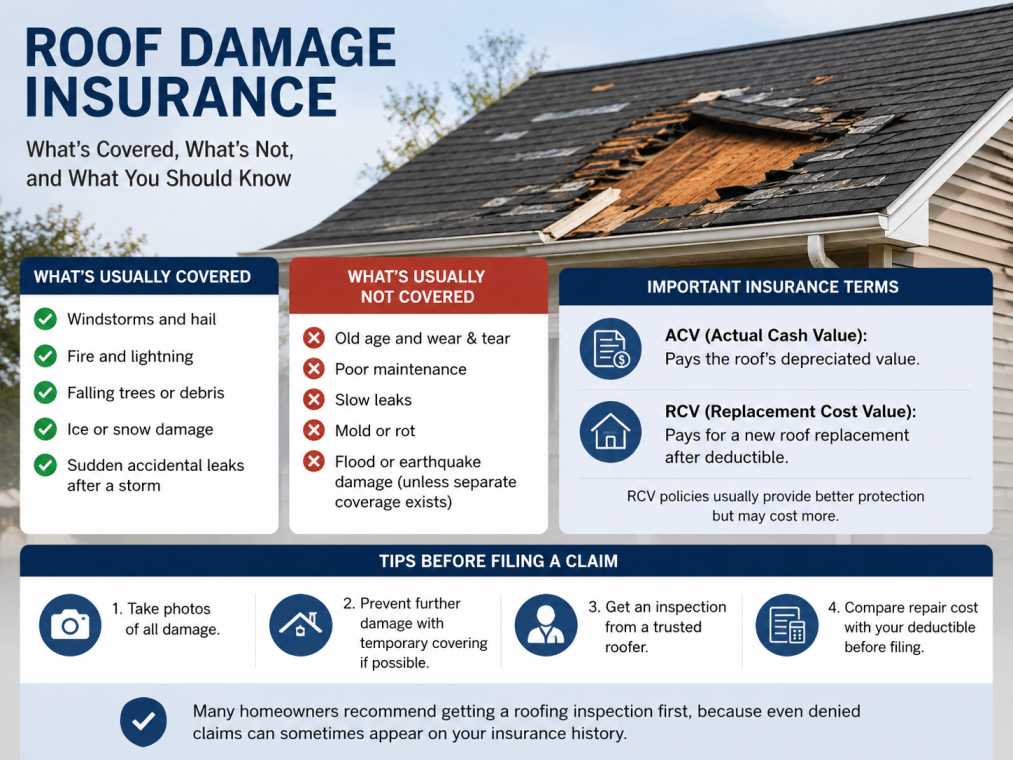
Step 5: Review the Settlement Offer Carefully
Once the inspection ends, your insurer will send a settlement offer. Read it carefully before accepting.
Pay attention to:
- Covered repairs
- Total payout amount
- Deductible costs
- Any excluded damage
If you disagree with the estimate, you can request clarification or seek another professional opinion.
Common Mistakes Homeowners Should Avoid
Many homeowners slow down their claims process by making avoidable mistakes. For example:
- Waiting too long to report damage
- Taking poor-quality photos
- Starting repairs before documentation
- Ignoring policy details
Instead, stay organized and communicate clearly throughout the process.
Helpful Resources for Roof Insurance Claims
You can also review official consumer resources before filing a claim. The Insurance Information Institute offers guidance for storm-related claims. In addition, the FEMA website provides disaster recovery tips for homeowners.
Final Thoughts
Roof damage can feel overwhelming. However, a clear plan makes the claims process easier. By inspecting the damage quickly, documenting evidence, communicating with your insurer, and reviewing settlement details carefully, you can improve your chances of a fair outcome.
Before the next storm arrives, review your insurance policy so you understand what your coverage includes. Preparation today can save time, money, and stress later.
About the Author