

Top Mistakes New Drivers Make with Named Driver Insurance
Named driver insurance rules are often misunderstood by first-time car owners. And this confusion can lead to denied claims or policy cancellations. In many cases, people assume insurance is simple. However, it is not. One small mistake in driver listing can create serious problems.
In this guide, you will learn the difference between a main driver and a named driver insurance rules. In addition, you will see how to avoid costly errors when buying your first car insurance policy.
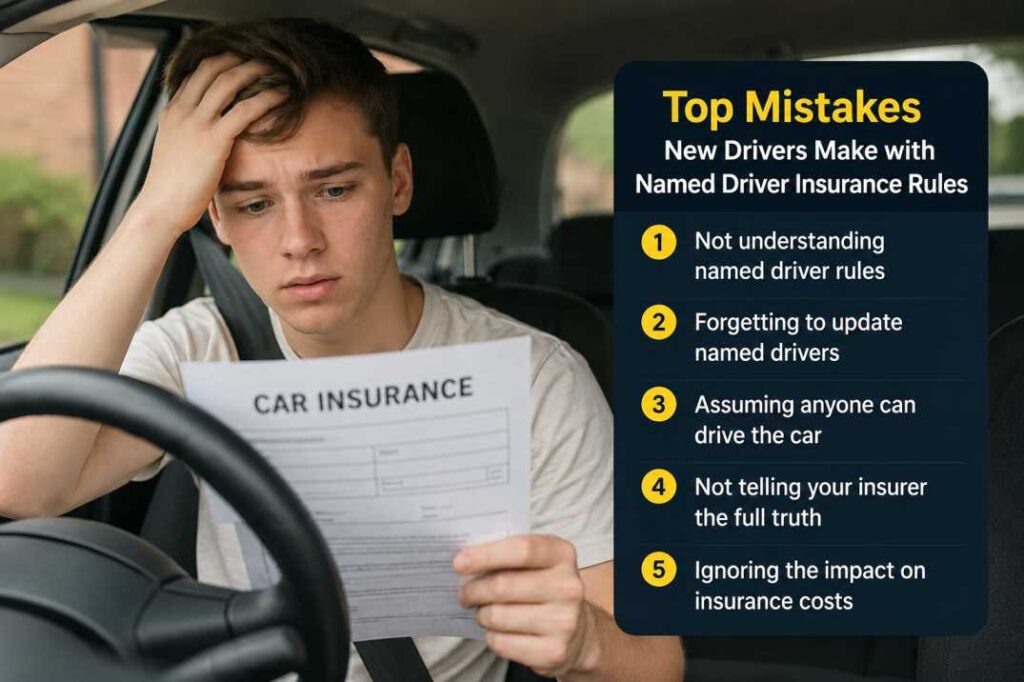
What Is a Main Driver vs a Named Driver?
Main Driver
The main driver is the person who uses the car most often. Insurance companies focus on this person first. Therefore, risk and pricing depend heavily on them.
Named Driver
A named driver is someone one added to the policy. They can legally drive the car. However, they do not use it as their main vehicle.
For more general insurance education, you can also visit the Insurance Information Institute for trusted guidance.
named driver insurance rules You Must Understand
Insurance companies follow strict rules. First, the main driver must be the person who drives the car most. Second, all regular drivers must be listed clearly. In addition, honesty is required at all times.
- The main driver must use the car most often.
- Named drivers must be secondary users only
- All regular users must be disclosed.
- Incorrect details may lead to claim denial.
Common Mistakes First-Time Car Owners Make
Many beginners make similar mistakes. As a result, they face insurance problems later.
- 1. Using parents as main drivers: This is often done to reduce cost. However, it can cause policy issues.
- 2. Not declaring daily use: If you drive daily but are listed as a named driver, claims may be denied.
- 3. Assuming coverage is the same: Different drivers may have different conditions.
- 4. Informal car sharing: Regular use without updates creates risk.
- 5. Ignoring insurer questions: This often leads to incorrect policies.
How First Car Policy Named Driver Confusion Happens
Many people misunderstand how policies work. First, they think adding names is enough. However, insurers look at actual usage patterns.
For example:
| Scenario | Correct Classification | Risk Level |
|---|---|---|
| Teen drives daily, parent listed | Teen = Main Driver | High risk of denial |
| Spouse shares car occasionally | Spouse = Named Driver | Low risk |
| Friend drives weekly | Must be declared | Medium risk if hidden |
Why Insurance Companies Care So Much
Insurance is based on risk. Therefore, younger drivers often cost more. In addition, usage patterns matter more than names.
As a result, wrong details can affect both price and claim approval.
How to Avoid Coverage Denials
To stay safe, follow these simple steps:
- Always list the true main driver.
- Be honest about daily driving habits.
- Update your policy when things change.
- Ask your insurer when unsure.
Beginner-Friendly Insurance Tips
In addition, here are simple tips for new drivers:
- Start with basic coverage first.
- Compare beginner-friendly policies.
- Look for safe driver discounts.
- Avoid extra add-ons early.
Learn more about safe driving and insurance basics at III Insurance Education.
Frequently Asked Questions
Can a named driver become the main driver?
Yes. If usage changes, you should update your policy.
Is it illegal to misstate the main driver?
Yes. It may considered insurance fraud in many cases.
Does adding a named driver increase premiums?
Sometimes. It depends on risk factors like age and experience.
What happens if I don’t list all drivers?
Claims may be denied, and the policy may be canceled.
Conclusion
In conclusion, named driver insurance rules are very important for first-time car owners. First, always be honest. 2nd, ensure the correct driver is listed. Finally, review your policy regularly. As a result, you can avoid claim issues and stay fully protected.
About the Author