Business interruption insurance can help protect a small business when a covered loss stops normal operations. For example, a fire, storm, or other property damage may force a company to close for days, weeks, or longer. As a result, many US business owners are comparing coverage before a disruption happens.
However, the best policy is not always the cheapest one. Instead, owners should compare limits, waiting periods, exclusions, claim support, and recovery timelines. This guide explains how to compare business interruption coverage in a clear and practical way.
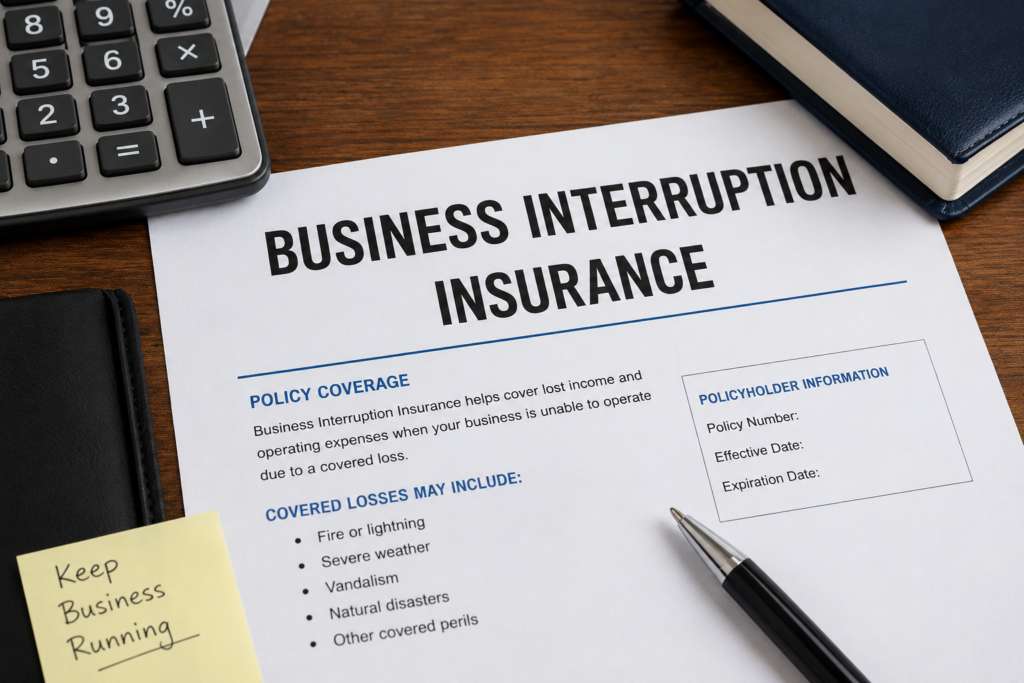
What Is Business Interruption Insurance?
Business interruption insurance helps replace lost income when a covered event shuts down or slows normal business activity. Usually, it is part of a commercial property policy or a business owners policy.
Depending on the policy, coverage may help pay for:
- Lost business income
- Employee wages
- Rent or mortgage payments
- Temporary relocation costs
- Taxes and utilities
- Loan payments
In many cases, the loss must involve direct physical damage from a covered event. Therefore, business owners should read the policy terms carefully before buying coverage.
Why Business Interruption Coverage Matters
A short closure can create serious cash flow problems. In addition, supply chain delays, repairs, and lost customer traffic can make recovery harder. Because of this, small businesses should compare coverage before they need to file a claim.
The Insurance Information Institute offers a helpful overview of business interruption coverage at III.org. Also, the US Small Business Administration shares disaster planning resources at SBA.gov.
1. Compare Coverage Limits
First, review how much the insurer may pay during a covered interruption. A low limit may reduce the premium, but it may not cover a long shutdown.
When comparing limits, check:
- Monthly income reimbursement
- Total policy limit
- Coverage duration
- Extra expense coverage
Also, seasonal businesses should use peak revenue periods when estimating coverage needs.
2. Review Waiting Periods
Most policies include a waiting period before payments begin. For example, a policy may require a 24, 48, or 72 hour delay.
A shorter waiting period can help businesses with tight cash flow. However, it may also increase the premium. Therefore, compare both speed and cost.
3. Check Covered Events and Exclusions
Next, review what events are covered. This step is important because policies can differ greatly.
Common Covered Events
- Fire and smoke damage
- Windstorm damage
- Theft or vandalism
- Certain water damage events
Common Exclusions
- Flood damage without flood insurance
- Earthquake damage without an endorsement
- Off-site utility outages
- Pandemic or disease-related losses
Before choosing a policy, ask the insurer to explain each exclusion in plain language.
4. Evaluate the Restoration Period
The restoration period is the time the policy may pay benefits while the business repairs damage and reopens. Some policies offer a short window, while others provide longer protection.
Compare the maximum restoration period, extended business income options, and coverage for delayed reopening. As a result, you can avoid gaps if repairs take longer than expected.
5. Look at Extra Expense Coverage
Extra expense coverage may help pay for costs that keep the business running after a covered loss. For example, it may cover temporary office space, rented equipment, or faster repairs.
This feature is useful for businesses that must keep serving customers during recovery.
6. Compare Claims Support and Insurtech Tools
Modern insurers may offer digital tools that make claims easier. For instance, some carriers provide mobile claim tracking, online document uploads, and 24/7 reporting.
When comparing insurers, review:
- Claim reporting options
- Digital document upload tools
- Mobile claim updates
- Dedicated claim representatives
- Business recovery resources
Faster claim support can reduce stress during a difficult recovery period.
7. Ask About Civil Authority Coverage
Civil authority coverage may apply when a government order blocks access to your business after nearby property damage. For example, road closures after a wildfire or hurricane may stop customers and employees from reaching your location.
However, policy terms vary. Therefore, compare this section closely.
8. Review Dependent Property Coverage
Some businesses rely on suppliers, manufacturers, or nearby anchor stores. If one of those locations suffers property damage, your business may also lose income.
Dependent property coverage may help in this situation. This can be especially useful for retailers, restaurants, and manufacturers.
9. Compare Deductibles and Premiums
Lower Home insurance premiums may look attractive. However, cheaper policies may include higher deductibles, lower limits, or more exclusions.
To compare value, review:
- Annual premium
- Deductible amount
- Coverage limits
- Optional endorsements
- Claim service reputation
The goal is to find strong protection at a reasonable price.
10. Consider Industry-Specific Risks
Different businesses face different interruption risks. For example, a restaurant may need spoilage and equipment breakdown coverage. Meanwhile, a manufacturer may need stronger supply chain protection.
Because of this, business owners should work with an insurance professional who understands their industry.
Questions to Ask Before Buying Coverage
- How is lost income calculated?
- What documents are needed for a claim?
- How long does reimbursement usually take?
- Are supplier disruptions covered?
- Does the policy include extended business income?
- Which exclusions apply to my business?
How to Prepare for a Business Interruption Claim
Good coverage is important. Still, strong records can make the claim process easier.
Helpful steps include:
- Keeping updated profit and loss statements
- Saving tax records and payroll reports
- Backing up digital files
- Documenting inventory and equipment
- Creating an emergency communication plan
- Reviewing coverage each year
Final Thoughts
Comparing business interruption insurance is about more than checking the premium. Small businesses should review limits, waiting periods, exclusions, restoration periods, extra expense coverage, and claim support.
In the end, the right policy can help protect income and support recovery after a covered disruption. Therefore, business owners should compare coverage carefully before a loss occurs.
About the Author