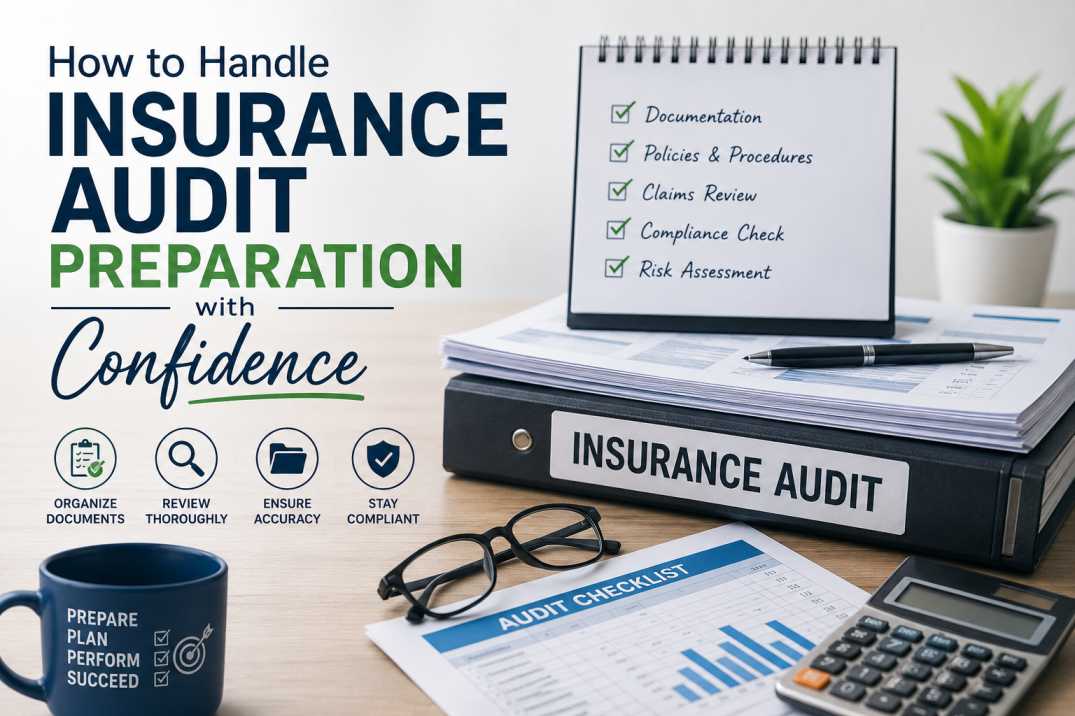
Insurance audit preparation helps your business stay organized, compliant, and ready when an insurer reviews your records. An insurance audit usually checks whether payroll, employee classifications, revenue, and business operations match the details used to calculate your premium.
With the right process, you can reduce stress, avoid missing documents, and respond to auditor questions more confidently. This step-by-step guide explains how to prepare your records, review compliance needs, and fix common issues before the audit begins.
Why Insurance Audit Preparation Matters
An insurance audit helps confirm that your policy information is accurate. For example, an insurer may review payroll, sales, job duties, subcontractor payments, and classification codes. Therefore, good preparation can help reduce errors and make the audit process smoother.
In addition, organized records make it easier to answer questions quickly. They also help your business keep better financial and compliance habits throughout the year.
Step 1: Review Your Insurance Policy
Start by reading your insurance policy carefully. This helps you understand what the auditor may review and which records you need to provide.
- Coverage types and policy limits
- Premium calculation methods
- Reporting requirements
- Employee classification rules
- Subcontractor or contractor requirements
For helpful recordkeeping guidance, review the IRS recordkeeping requirements.
Step 2: Gather Required Documents
Next, collect your documents before the audit date. Missing records can delay the review, so early preparation is important. Meanwhile, keeping everything in one place can prevent last-minute confusion.
- Payroll records and tax filings
- Financial statements, such as income statements and balance sheets
- Employee compensation and benefits data
- Invoices, receipts, and expense records
- Subcontractor certificates and payment proof, if applicable
- Business licenses or certifications, if required
Small businesses can also review the SBA guide to keeping business records for general organization tips.
Step 3: Organize Your Audit Records
After gathering the documents, sort them into clear categories. For instance, you can use labeled folders, cloud storage, or accounting software. As a result, the auditor can review information faster, and your team can track what is complete.
| Category | Documents | Status |
|---|---|---|
| Payroll | Employee wages, tax filings, benefits records | Pending / Complete |
| Financial Records | Income statements, balance sheets, revenue reports | Pending / Complete |
| Compliance | Licenses, certifications, policy documents | Pending / Complete |
| Expenses | Invoices, receipts, subcontractor payments | Pending / Complete |
Step 4: Verify Compliance Requirements
Then, check whether your records match your policy and business activity. This step is useful because small errors can create questions during the audit.
- Confirm employee job classifications
- Review contractor and subcontractor records
- Check licensing or industry requirements
- Compare payroll records with tax filings
- Make sure revenue or sales figures are accurate
If you are unsure about a classification or reporting rule, contact your insurance provider, accountant, or qualified advisor before submitting final information.
Step 5: Identify and Fix Potential Issues
Now review your records for mistakes or missing details. However, do not wait until the audit appointment to correct them. Early action can make the process easier and reduce avoidable back-and-forth.
- Incorrect payroll reporting
- Missing invoices or receipts
- Misclassified employees or contractors
- Incomplete subcontractor documentation
- Unclear financial records
Common Insurance Audit Mistakes
Many audit problems happen because businesses wait too long to prepare. In addition, unclear records can make simple questions harder to answer.
- Waiting until the last minute
- Keeping incomplete financial records
- Misunderstanding classification rules
- Mixing personal and business expenses
- Failing to keep subcontractor documents
- Ignoring policy reporting requirements
Insurance Audit Preparation Checklist
Use this checklist during the year, not only when an audit notice arrives. As a result, your business will be better prepared when the review begins.
- Review insurance policy terms
- Collect payroll and financial records
- Organize documents by category
- Verify employee classifications
- Check contractor and subcontractor records
- Review compliance requirements
- Correct discrepancies early
- Keep copies of submitted documents
Final Thoughts
In conclusion, insurance audit preparation should be part of your regular business routine. When you keep accurate records, review your policy, and correct issues early, the audit process becomes easier to manage.
Start early, stay consistent, and treat recordkeeping as an ongoing business habit. Therefore, your company will be more prepared when an insurance audit occurs.
About the Author