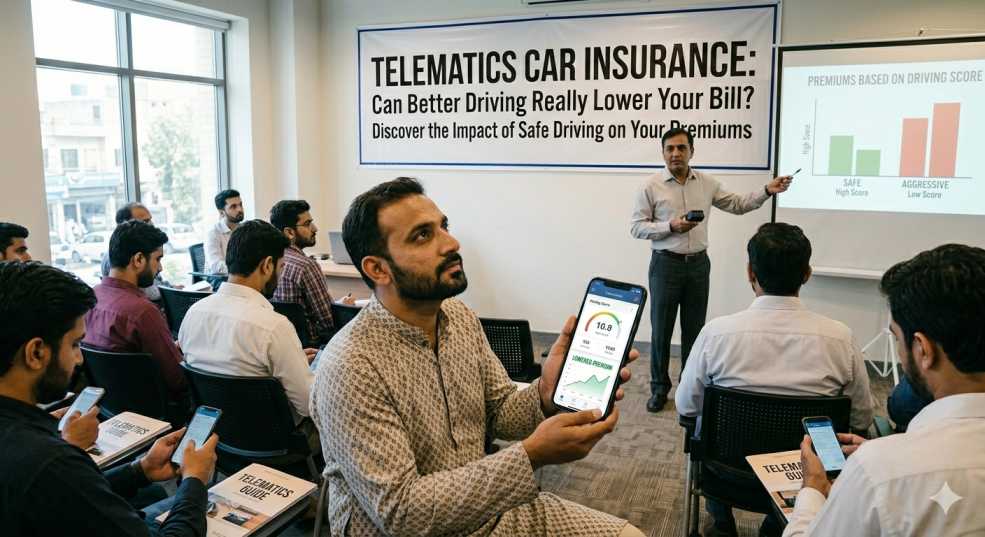
telematics car insurance lets insurers price policies based on how you actually drive. Instead of relying only on age, location, or vehicle type, insurers track real driving behavior. As a result, safe drivers may pay less over time.
This guide explains how telematics devices work, how they influence car insurance costs, and what you should consider before joining a usage-based program. In addition, you will learn how to improve your driving score and potentially lower your premium.
What Are Telematics Devices?
Telematics devices are small tools installed in your vehicle or connected through a mobile app. They collect driving data using GPS and sensors. For example, they track how, when, and where you drive.
These devices usually monitor:
- Speed and acceleration
- Braking patterns
- Cornering behavior
- Distance and driving time
Overall, this data helps insurers understand risk more accurately and reward safer driving habits.
Learn more about telematics here: Telematics overview
How Telematics Car Insurance Affects Premiums
Insurance companies use telematics car insurance premium to measure real driving behavior. Then, they adjust pricing based on risk. In contrast to traditional insurance models, this approach focuses on how you drive instead of general statistics.
If you drive safely, you may qualify for lower premiums. For example, smooth braking, steady speeds, and safe driving hours can improve your score. However, risky driving patterns may prevent discounts.
How pricing adjustments typically work
- Safe driving behavior may lead to discounts or cashback rewards
- High-risk driving patterns may keep rates the same or increase them
- Some insurers use monthly driving scores to adjust pricing
Key Benefits of Telematics Car Insurance
Telematics car insurance offers more transparency and control. Therefore, many drivers now prefer usage-based programs over traditional pricing models.
1. Potential Lower Premiums
Careful drivers may pay less because insurers reward safe habits. In addition, consistent safe driving can improve long-term savings.
2. Driving Feedback and Insights
Many programs provide app-based feedback. This helps drivers improve braking, speed control, and overall safety habits.
3. Encourages Safer Driving
Because driving behavior is tracked, many people naturally drive more carefully. As a result, overall road safety may improve.
Learn more about usage-based insurance: Usage-based insurance
Possible Drawbacks to Consider
Although telematics car insurance has benefits, it is not ideal for everyone. Therefore, you should understand the trade-offs before enrolling.
- Privacy concerns: Insurers collect and analyze driving data.
- Connectivity requirements: Some systems depend on GPS or mobile signals.
- Driving scrutiny: Every trip may affect your insurance score.
Who Should Consider Telematics Car Insurance?
This type of insurance works best for drivers who want more control over their costs. For example:
- Safe and cautious drivers
- Low-mileage drivers
- People trying to reduce insurance costs
- New drivers building a driving record
Tips to Maximize Savings
If you join a telematics car insurance program, your habits directly affect your savings. Therefore, small improvements can make a big difference.
- Avoid harsh braking and rapid acceleration
- Stick to speed limits consistently
- Reduce late-night or high-risk driving
- Drive steadily to build a strong score over time
The Future of Car Insurance
Telematics car insurance is part of a shift toward personalized pricing. In the future, insurers may rely even more on real-time driving data. As a result, premiums could become more closely tied to actual behavior.
Conclusion
Telematics car insurance gives drivers more control over their costs by linking premiums to real driving behavior. While privacy and usage factors matter, many drivers still find the potential savings valuable.
If you drive safely and consistently, telematics programs may help you reduce your car insurance expenses over time.
About the Author